


17/10/2026
When Clouds Sing and Music Touches the Sky
Of the beauty of the moment, moving music and travel memories
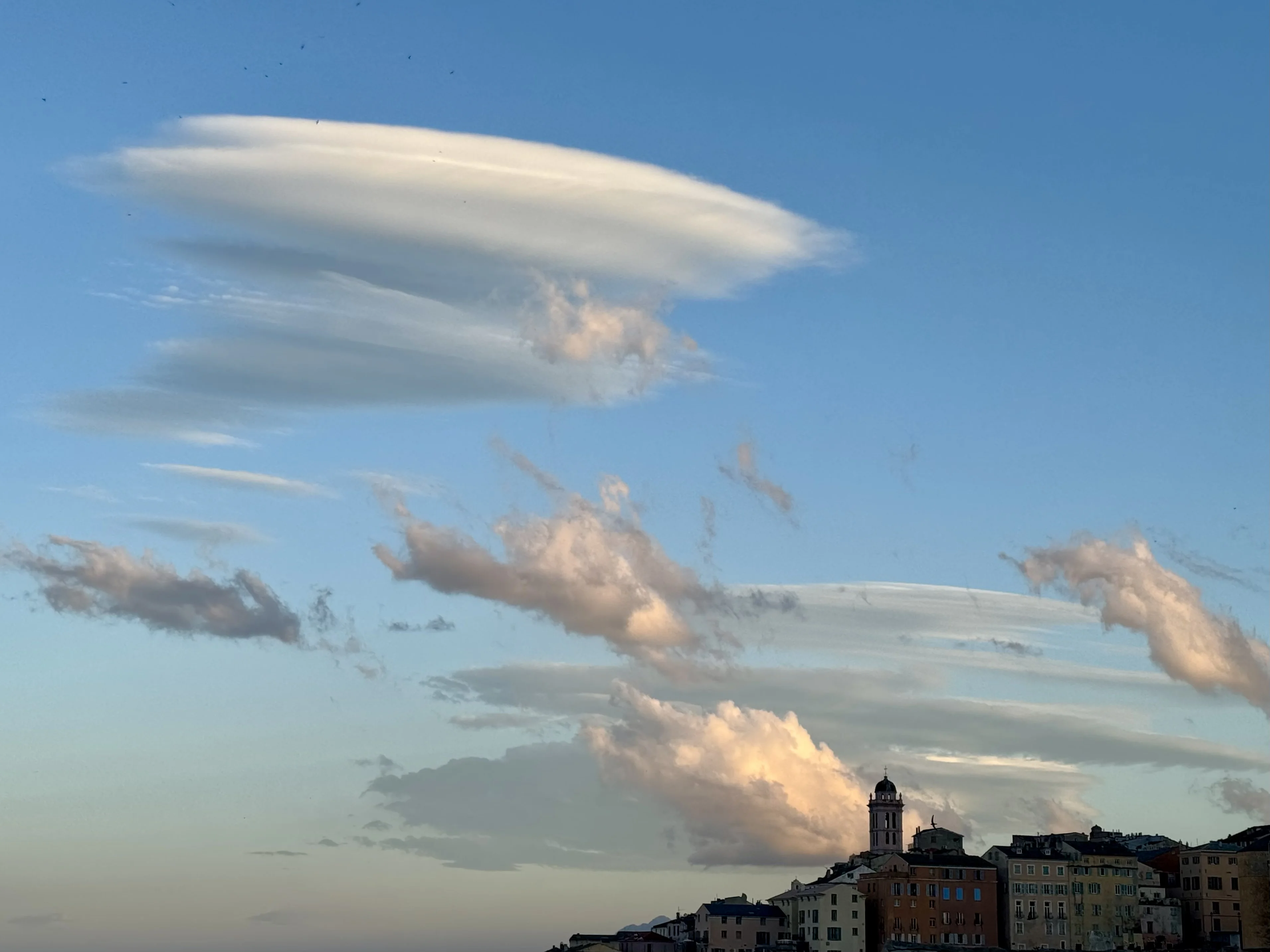
I have a soft spot for clouds.
For enormous white, fluffy mountains that look as though someone has been a little too generous with the whipped cream.
For dramatic storm clouds gathering over the sea. And for delicate wisps that turn the sky into a watercolour painting.
Sometimes, when I'm travelling, I simply stop and look up. Even though there are so many sights I could be exploring.
And what am I doing? Watching clouds.
Of course, no two clouds are quite alike. There are the delicate cirrus clouds, floating like gentle violin notes.
The billowing cumulus clouds, those familiar fair-weather favourites.
The grey stratus clouds, more like a long, sustained cello note.
And the mighty cumulonimbus clouds, when the entire orchestra joins in, complete with timpani and trumpets.
Yes, the sky is one enormous orchestra. I just haven't spotted the conductor yet.
And clouds and music really do have something in common. They float, gather, change shape and eventually fade away.
When Composers Paint Clouds
Claude Debussy even composed clouds. The first movement of his orchestral work Trois Nocturnes is called Nuages, meaning ‘Clouds’. The music changes gently and fluidly. Almost as though you were lying in a meadow, watching the clouds drift across the sky.
György Ligeti went a step further. In his orchestral work Atmosphères, he layered numerous musical voices over one another until they merged into a single, floating whole.
His technique is called micropolyphony. A complicated word for a fascinating piece of music.
You may even recognise it from Stanley Kubrick's film 2001: A Space Odyssey.
What clouds create for our eyes, György Ligeti creates for our ears through his music.
Out at Sea, Where the Sky Becomes the Main Attraction
Two days. Three days. Four days. Nothing but sea. And sky.
Anyone who has spent several days aboard a cruise ship without calling at a port may recognise this feeling.
On voyages like these, I've discovered something I hadn't really appreciated before. Just how exciting and full of anticipation it can be when seemingly nothing is happening.
No land in sight, no mountains, no houses, no church steeples. Just that enormous horizon. And the clouds above it.
On the first day, you glance up almost absent-mindedly. On the second, you begin to notice the differences. By the third, you realise that the sky is one magnificent, constantly changing performance.
Delicate veils of cloud in the morning, towering white formations at midday, and by evening, a painting in gold, pink and violet.
I remember that wonderful feeling of standing on deck, feeling the wind and simply looking.
No emails, no sightseeing attraction I absolutely have to fit in. Just looking and marvelling.
The small, delicate clouds remind me of individual piano notes. The larger formations, slowly growing and gathering, remind me of string players gradually coming together to form a mighty orchestra.
And when a storm starts brewing on the horizon? That's when a little Beethoven seems entirely appropriate.
Out at sea, I've learnt that you don't always have to arrive somewhere to experience something memorable.
From Queen Mary 2 to Bornholm, Clouds Along the Way
I find the idea of combining an Atlantic crossing with music and dance particularly appealing.
From 16 to 23 July 2027, English National Ballet will be aboard Queen Mary 2 for a voyage from Southampton to New York.
The dancers will perform on board, invite guests to rehearsals and workshops, and share stories of life on stage and behind the scenes.
Outside, the vast Atlantic. Inside, the world of ballet. And in between, seven days to watch the sky.
Quite different cloudscapes await us on Bornholm. In the north, cliffs rise above the Baltic Sea, while in the south, a wide sandy beach stretches out at Dueodde. And above it all, that vast Nordic sky. Bornholms Musikfestival and the summer jazz festival in Nexø provide a wonderful variety of music to accompany it.
My suggestion is to combine a walk around Hammershus with an evening concert. And make sure you leave plenty of time simply to gaze out to sea.
Iceland, too, deserves a place among our cloudscapes. Above black lava fields and rugged coastlines, the skies take on extraordinary forms that seem perfectly suited to the music of Sigur Rós and Ólafur Arnalds. If you'd like to discover more about this connection,
you can read our previous blog, ‘Iceland, Where the Landscape Composes Its Own Music’.
London and New York, Where the Sky Becomes a Stage
In London, I love the contrast between the historic cityscape and the ever-changing clouds overhead.
One of the loveliest ways to watch the sky is from the River Thames or the Sky Garden, a lush indoor garden and viewing space high above the city's rooftops.
In the evening, the West End beckons with musicals such as Andrew Lloyd Webber's Jesus Christ Superstar and Anaïs Mitchell's Hadestown. Two very different works that show how music can evoke entire worlds of emotion. Sometimes gentle and floating, sometimes as dramatic as a stormy sky.
In New York, you sometimes have to search for the sky between the skyscrapers. From Brooklyn Bridge or aboard the cable car to Roosevelt Island, suspended high above the East River, you can appreciate its full expanse once again.
And on Broadway? Things can get a little wilder with The Rocky Horror Show.
My suggestion for both cities is to look up a little more often during the day and let the music on stage surprise you in the evening.
A Little Cloud Experiment for Your Travels
Perhaps on your next trip, you'll take a photograph of a cloud that catches your eye and later find a piece of music to go with it.
Or you could listen to Debussy's Nuages with your eyes closed. What images come to mind? And what does the sky look like when you open your eyes and look up?
I've started doing this quite deliberately, whether on a beach in Bornholm, on a park bench in London or on the deck of a ship in the middle of the Atlantic.
Little by little, you'll create your very own musical cloud album.
I think I'll continue spending quite a lot of time watching clouds.
About the Author
Jürgen Mamczek is the founder and Managing Director of Music Travel Hideaways and has worked in the travel industry for more than 30 years. His passion for music and travel continues to take him to new places, concerts and festivals that stay with him long afterwards.
He has personally visited most of the destinations and hotels he recommends.
